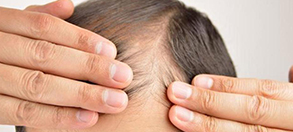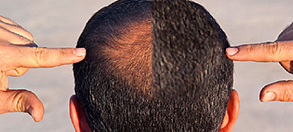
Premature balding is hair loss that occurs at an earlier age than normal. Hair loss is a distressing event that can alter one’s appearance and self-esteem; it can be caused by genetics, hormonal changes, or even underlying health conditions or deficiencies. Premature balding can be damaging to one’s self-esteem, especially during a period in life when individuals may still be developing their confidence and identity. Oftentimes, patients do not realize that hair loss does not have to be permanent, and premature balding can be treated.
At Houston Hair Transplant Center (HHTC), Dr. Goran Jezic, Houston’s leading hair restoration physician, and his team offer several different treatments to help you stop balding prematurely. The HHTC medical team has helped thousands of people address their hair loss with effective medical and surgical solutions. Our team specializes in customizable treatments, helping each individual mitigate their hair loss and restore lost hair while improving density.
If you are ready to schedule your consultation and learn more about available hair loss treatments and hair restoration procedures, please contact us online or call our Houston office at (713) 864-2300.
What Causes Premature Balding
Premature balding is hair loss that starts earlier than what is commonly expected. Premature hair loss affects approximately 57.6% of patients in different populations and has become an increasingly growing concern over time. (1) A variety of underlying factors can contribute to this condition, including stress, genetics, diet, and more.
Stress
Chronic stress can disrupt the body’s hormonal balance and directly impact the hair growth cycle. When we get stressed, our bodies release a hormone called cortisol. The presence of cortisol inhibits certain cells in the skin from secreting another hormone called GAS6, which is necessary for initiating the start of the hair growth cycle. Once each patient’s stress levels are normalized, GAS6 is secreted again, restoring normal growth to the scalp. (2)
Nutrient Deficiency
Similar to the rest of the body, hair follicles require vitamins and nutrients. Nutritional deficiencies can contribute to the development of or worsen certain health conditions, including increased shedding and weakened, brittle strands. Many essential vitamins and substances enhance the health and appearance of our hair, such as iron, zinc, fatty acids, and antioxidants.
Iron deficiency is the most common nutritional deficiency and is a well-known contributor to hair loss. Zinc is an essential mineral required for many cellular functions, but a lack of it can delay wound healing and cause brittle and thinning hair. Fatty acids, such as omega-6 and omega-8 fatty acids, can help enhance follicle proliferation and reduce overall hair loss and the lightening of hair. Many other essential nutrients and vitamins can be considered antioxidants, such as vitamins A and E. Oxidative stress is often linked to hair loss, making it essential for antioxidants to be included in one’s diet. (3)
Hormonal Imbalance
Hormones play a central role in regulating the hair growth cycle. When imbalances occur, the hair follicles can start to shrink and shed prematurely. Factors such as aging, stress, and certain medical conditions can further disrupt this balance. Although hormone levels may stabilize over time in some cases, the disruption can interfere with the natural hair cycle, delaying new growth and contributing to a gradual decline in overall hair density.
Treatments for Premature Balding
We offer several treatments to help each patient address their premature balding. Our hair restoration services consist of a variety of non-surgical, surgical, oral, topical, injectable, laser, and medical treatments, all of which can be performed to help enhance follicular health and natural growth in the scalp.
Autologous Conditioned Plasma (ACP)
Autologous conditioned plasma (ACP) is a concentrated serum that utilizes the natural growth factors found in our blood and plasma. A sample of blood is drawn from each patient before it is processed to raise the concentration of platelets. This serum is then injected into various parts of the scalp to enhance growth. Additionally, our clinical team may also inject other autologous and allogeneic tissue to stimulate growth and control premature balding.
Cellular Micrografting and Procedures
Our doctors and clinicians perform both autologous and allogenic procedures to mitigate hair loss and help restore hair. These procedures are premised on the science of advanced cellular medicine that has led to the development of regenerative therapies for hair loss and restoration. These cellular products could be derived from your own hair tissue or from allogenic sources. Allogenic products could include exos that are derived from cellular sources derived from amniotic, embryonic, or placenta tissue.
Laser Cap
Our Laser Cap is a wearable device that utilizes low-level light therapy to enhance hair growth. This cap contains red LED lights that emit a certain wavelength to help encourage tissue repair and regeneration. As activity increases with the light exposure, more hair follicles are produced and stimulated to grow. This treatment also helps prolong the anagen phase and shorten the telogen phase of the hair growth cycle, giving follicles a longer opportunity to grow. (4)
Our LaserCap has over 300 Diodes and has the highest energy (Joules) per sq. cm. compared to any laser device for hair loss in the market.
Minoxidil
We offer Minoxidil as a liquid foam solution to help each patient address signs of premature balding with the use of a topical treatment. We also offer oral minoxidil as well as injectable minoxidil, both of which are more effective than the topical solution. Minoxidil was originally developed as a hypertension medication, but has been shown to have a positive impact on hair growth. Minoxidil is a vasodilator, which means it opens the blood vessels, allowing for the hair follicles to function more efficiently.
Finasteride
For patients interested in topical or oral medications for hair growth, we offer finasteride. Finasteride is a medication that reduces the production of 5-alpha-reductase. In the body, this enzyme can lead to the formation of dihydrotestosterone (DHT), the leading cause of male pattern baldness. DHT can cause the hair follicles to shrink, producing fewer hairs in the process. However, this medication is designed for long-term use, meaning that stopping the medication may result in increased production of 5-alpha-reductase and, subsequently, the return of hair loss.
Topical Compound
Our hair restoration specialists offer a prescription-based topical compound that combines minoxidil, finasteride, caffeine, zinc, peptides, and other ingredients to help mitigate hair loss. It combines many powerful ingredients and components, thereby greatly reducing the need to administer those individually. This is a highly effective topical that has a high renewal rate amongst our patients and has been specially formulated by our R&D team.
FUE
Follicular Unit Extraction, also known as Follicular Unit Excision or FUE, is a highly popular hair restoration procedure that involves harvesting hair grafts from the back of the head and transplanting them to the thinning and balding areas. FUE utilizes a small circular tool to extract hair grafts before reimplanting them into areas experiencing thinning and balding, effectively restoring growth without linear scarring. This technique is ideal for patients who prefer to wear their hair in shorter styles. We offer different variations of FUE using different pieces of cutting-edge hair restoration technology, such as the Sapphire FUE or ATERA FUE.
Follicular Unit Transplant (FUT)
Our doctors also offer the Follicular Unit Transplant (FUT) procedure for those who need a higher graft count but have limited donor hair, as well as those with a prior hair transplant, particularly a strip procedure that has a scar, which can be revised when combined with a new linear scar.
Products & Supplements
We offer a vitamin gummy that is highly popular amongst our patients. It consists of a high dose of biotin, zinc, and other vitamins, nutrients, and minerals to help mitigate hair loss and strengthen hair follicles. Additionally, we have introduced our second-generation stem cell shampoo, conditioner, and topical serum that is highly effective in reducing hair loss and strengthening hair follicles. Once again, specially formulated by our R&D team.
Well-Balanced Diet & Nutrition
A well-balanced diet and nutrition are imperative for hair health and regrowth, as poor nutrition is linked to shedding and poor follicular function. Patients should ensure they are maintaining a balanced diet, including foods with nutrients that are vital for hair health. These include foods rich in iron, zinc, antioxidants, and fatty acids, as each of these significantly enhances the hair growth cycle and process. Avoidance of synthetic products and shampoos, lotions, and potions can also help mitigate unnecessary hair loss, along with excessive sun exposure.
Stress Management
Stress management is an essential part of general health, and high levels of stress can lead to premature balding and shedding. It is recommended to engage in hobbies that exercise mindfulness, such as journaling or meditating, to help stay relaxed. Getting a full night of sleep each evening and lowering one’s daily intake of caffeine can also significantly reduce stress levels.
Ideal Candidates
Ideal candidates for our hair restoration treatments include anyone experiencing early onset thinning or shedding, as well as the appearance of a receding hairline. Those experiencing certain scalp conditions or androgenic alopecia may also benefit from our hair restoration services.
All candidates interested in addressing premature balding should be in good overall health without any underlying medical conditions that may impact their recovery or results. It is also important that realistic expectations are held. Our clinical team will assess each potential patient’s scalp health and medical history to determine their candidacy for our hair restoration services. In some cases, a biopsy may be recommended by Dr. Jezic to identify the underlying reasons for your hair loss.
Preparation
Preparation can vary depending on the type of treatment being performed. Our clinical team will provide a set of preparation instructions to each patient during their consultation, tailored to their personal treatment plan and scalp condition. If a hair transplant is recommended, patients may be asked to stop taking certain medications or supplements that have blood-thinning properties, as advised by our doctor and your primary care physician. Nicotine use should be fully ceased several weeks in advance, and alcohol consumption should be avoided for 24-72 hours before a hair transplant. Patients should also get plenty of rest before their appointment.
Results
Each patient’s results will vary depending on the type of procedure and treatment. Non-surgical procedures and treatments take several weeks or months to demonstrate results, but most hair transplant patients begin to see initial regrowth after four months, with improved density after six to twelve months. As your hair continues to grow back, it may be styled, cut, and worn however you wish. Because our treatments improve healthy follicular activity or transplant healthy hair follicles, the results after a hair transplant are generally permanent, enabling patients to enjoy their luscious locks for years to come. Non-surgical treatments and preventive maintenance are an ongoing regimen that needs to be adhered to long-term to preserve one’s hair and promote hair health and regrowth.
Cost of Premature Balding Treatments in Houston
The pricing of each patient’s hair restoration treatment can vary depending on the type of treatment received. Our clinical team will discuss the cost of each patient’s treatment once their treatment plan has been tailored to their goals. Non-surgical procedures and treatments, including products and supplements, are very affordable. Hair transplants are generally priced by graft and the type of procedure.
To receive the cost of your personalized hair restoration treatment, please contact us online or call our Houston office at (713) 864-2300.
FAQ
How do you diagnose premature baldness?
At HHTC, Dr. Jezic and his clinicians utilize the most advanced hair loss diagnostics German technology available in the market called TrichoLab, which maps your scalp to identify density, hair quality, texture, curvature, and other factors. In some cases, a biopsy may be recommended, particularly for suspected Alopecia Areata and other autoimmune conditions.
Is it possible to reverse the effects of premature balding?
Yes, depending on the cause, premature balding can often be managed or reversed with appropriate treatments. Our clinical team will meet with you during your consultation to help you determine the root cause of your premature balding and recommend the most effective treatment for your needs.
How effective are medical hair loss treatments?
Many patients experience satisfactory results with ongoing treatments; however, individual outcomes can vary depending on their treatment plan and the severity of their conditions. Non-surgical treatments can take several weeks or months to see results. Hair transplant results begin to show after about four months and can take up to a year or more for final results.
Is it painful to undergo a hair transplant?
At HHTC, we use local anesthesia to help minimize any pain during the hair transplantation procedure itself. Most patients report manageable discomfort during their recovery, which may be managed using pain medications.
How long will the results of my hair transplantation last?
The results of hair transplantation are considered permanent, as once the new hair begins to grow, it may be cut or styled as each patient pleases.
Are there any risks associated with hair restoration treatments that I should know about?
Risks are generally low and often consist of minor irritation or swelling at the injection sites. Any concerns should be discussed with our clinical team during your personal consultation.
References
- Liu LP, Wariboko MA, Hu X, Wang ZH, Wu Q, Li YM. Factors associated with early-onset androgenetic alopecia: A scoping review. PLOS ONE. 2024;19(3). doi:https://doi.org/10.1371/journal.pone.0299212
- Choi S, Zhang B, Ma S, et al. Corticosterone inhibits GAS6 to govern hair follicle stem-cell quiescence. Nature. Published online March 31, 2021. doi:https://doi.org/10.1038/s41586-021-03417-2
- Guo EL, Katta R. Diet and hair loss: effects of nutrient deficiency and supplement use. Dermatology practical & conceptual. 2017;7(1):1-10. doi:https://doi.org/10.5826/dpc.0701a01
- Pillai J, Mysore V. Role of low-level light therapy (LLLT) in androgenetic alopecia. Journal of Cutaneous and Aesthetic Surgery. 2021;14(4):385. doi:https://doi.org/10.4103/jcas.jcas_218_20