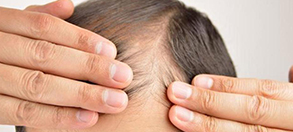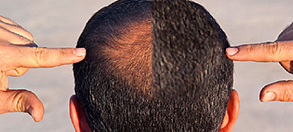
Choosing a hair transplant doctor or surgeon is one of the most important steps in your hair transplant journey. In a city like Houston, TX, with so many options, this might seem like a daunting task at first.
This resource can help you learn more about what to look for when you are doing your research. Your hair transplant doctor’s training, credentials, experience, and offered treatments can all affect your procedure and final results, making it essential that you choose someone you can trust.
Houston Hair Transplant Center (HHTC) is one of Texas’s leading hair restoration clinics. Dr. Goran Jezic, a board-certified hair restoration specialist, leads our team of clinicians.
If you are ready to schedule a consultation to learn more, we invite you to submit our online contact form or call our Houston office at (713) 864-2300.
About Choosing the Best Hair Transplant Surgeon / Doctor
Who performs your hair transplant procedure can significantly influence the quality of your results, so it is always best to seek care from the best surgeons in your area.
However, being “the best hair transplant doctor or surgeon” is more than being certified for the procedure or using new devices and technologies. What sets the best hair transplant doctors and surgeons apart from the rest is their ability to assess and diagnose your scalp health, select an effective solution, tailor their techniques accordingly, and integrate artistry and science into the procedure to provide seamless results.
About Hair Transplants
Hair transplant procedures are surgical treatments that can restore a fuller, denser appearance to your scalp. They take healthy hair follicles that are resistant to thinning or shedding and transplant them to the thinning and balding areas of the scalp experiencing hair loss. (1)
Dr. Jezic’s Training and Credentials
It is important to always research a doctor’s training and credentials before undergoing a procedure. They should be willing to provide this information on their website or in person, including where they got their medical degree and completed their residency, the type of training they received, whether they are board-certified, and the specific board certifications that they have.
Dr. Jezic attended medical school at UT Health Science Center in Houston, where he also completed his residency. UT Health Science Center boasts one of the most competitive residency programs in the state. He then received additional specialty training in physical medicine and rehabilitation at the University of Utah before starting his medical practice in Houston.
Dr. Goran then started learning how to perform hair transplant procedures after seeing the NeoGraft device. He found that this technology made hair transplants less damaging and invasive than conventional hair transplant procedures. He and his practice are dedicated to performing hair restoration and hair loss procedures. Now, Dr. Jezic has added other advanced hair transplant technologies and techniques to his arsenal, including the ATERA, Sapphire FUE, FUT, and other techniques.
The Importance of Board Certification
When seeking any treatment or procedure, you must choose a doctor who is actively board-certified. A board certification can differentiate a doctor who can perform hair transplants from one who is actively dedicated to continuing their training and maintaining a higher standard of care.
The American Board of Medical Specialties (ABMS) consists of 24 different board certifications, each of which offers additional board certifications in focused subspecialties. Dr. Jezic maintains his certification in physician medicine & rehabilitation (PM&R). This specialty addresses disorders and disabilities affecting your muscles, bones, and nervous system. (2)
How Does a Doctor Become Board-Certified?
To become a board-certified doctor, you must undergo additional training and testing. Each of the 24 medical boards has its own requirements and examination process. For physical medicine and rehabilitation, doctors must complete a four-year residency program in PM&R. In their final year of residency, they can apply for the first part of their certification examination. This is an online test that the board administers on a single date each year. It consists of 325 questions that applicants complete across two different 3-hour sections. The questions cover the following topics:
- Foundational Rehabilitation Concepts
- Electrodiagnostic Medicine
- Neurological Rehabilitation
- Musculoskeletal Rehabilitation
- Medical Rehabilitation (3)
After the first part of the examination, doctors must take an oral examination. This consists of two 50-minute examination sessions that test how well the applicant can apply their textbook knowledge to real-world scenarios. The proctors will begin by presenting a clinical case description. The applicant will then need to apply their knowledge to:
- Diagnose and manage the patient
- Collect the appropriate data for patient management decisions
- Treat or direct for the appropriate treatments
- Demonstrate they can navigate through the healthcare system
- Clearly communicate information to both the patient and other hospital staff. (4)
By testing these concepts, the board can assess each doctor’s real-world knowledge and patient care abilities. Board certification represents more than just a commitment to furthering your skills, but also a representation of the dedication required to provide patients with the respect, care, and professionalism they truly deserve.
What Type of Hair Transplants Do We Offer?
Dr. Jezic offers a wide array of treatments that can help you restore your hair and improve scalp health. A few of our treatments include follicular unit extraction or excision (FUE), Sapphire FUE, Follicular Unit Transplants (FUT), Body-to-Scalp hair transplants, No Shave or Shaveless Long Hair FUE, and non-surgical hair transplants. During your personal consultation, Dr. Jezic will assess your medical history, scalp health, and hair loss patterns to determine the best course of action for your concerns.
Follicular Unit Extraction
Follicular unit extraction (FUE) is the primary method of hair restoration that Dr. Jezic and his team perform. This technique involves extracting individual hair follicles that are resistant to hair loss and then transplanting them to patchy or thinning areas. (6) Dr. Jezic typically sources the grafts from the back or sides of the scalp, but if there is not enough hair in the area, he can also transplant grafts from other regions of your body, such as the chest, abdomen, beard/chin, arms, and legs.
With FUE, Dr. Jezic can perform treatments such as:
Advanced Surgical Hair Transplants
Advanced hair transplants utilize technological devices and innovative technologies to help transplant your hair grafts more precisely and efficiently. Each of Dr. Jezic’s devices employs either wireless or suction-based FUE technology while minimizing scarring, avoiding unnecessary tissue damage, and improving your comfort during the transplant itself. The ATERA technology keeps the graft moist and lubricated during the process, so the grafts don’t die before they are transplanted to the thinning and balding areas following harvesting & extraction.
A few of our advanced procedures include:
Some of our patients require very large sessions that may need to be completed over two days, and other sessions may require a higher level of anesthesia and sedation.
Non-Surgical Hair Transplants
Non-surgical hair transplants are a collection of medical-grade solutions that can restore the appearance of your hair without general anesthesia or considerable downtime. Dr. Jezic or a member of his team may offer one of these procedures if you are uninterested in surgical intervention, have minimal concerns, or are not a candidate for another hair restoration procedure.
We offer several non-surgical options, such as:
Cost of Hair Transplants in Houston, Texas
Dr. Jezic will discuss the pricing of your hair transplant in person once he has established your treatment plan. The cost of your hair transplant will vary depending on various factors, such as the type of hair transplant you undergo and the number of grafts he places, among other factors. For further inquiries about pricing, please request a consultation online or call (713) 864-2300 to reach our Houston office.
FAQ
What does it mean to be board-certified as a hair transplant doctor or surgeon?
Possessing a board certification means that a doctor has undergone additional training and testing to advance their knowledge and hold themselves to a higher standard of patient care.
How can I verify a doctor’s board certification online?
You may verify a doctor’s board certification on the ABMS website. Here, they will let you know what board certifications they hold, when their board initially certified them, if they are still actively certified, and more.
Where is Dr. Jezic’s office located in Texas?
HHTC has offices conveniently located in Houston, Austin, and San Antonio, Texas.
How will I know if I am a good candidate for a surgical hair transplant?
Attending a consultation is the best way to determine your candidacy. At this consultation, Dr. Jezic can talk to you about your medical history, listen to your personal goals, and assess your scalp. He will then either help you create your treatment plan or recommend an alternative solution.
How long will the results of a surgical hair transplant last?
The results of a hair transplant are generally considered to be permanent. This means that once the transplanted hair has started growing, you may wear, cut, and style it as you wish. Patient experiences may vary.
References
- Zito PM, Raggio BS. Hair Transplantation. PubMed. Published 2021. https://www.ncbi.nlm.nih.gov/books/NBK547740/
- American Board of Physical Medicine and Rehabilitation | An ABMS Member Board. American Board of Medical Specialties. Published November 21, 2023. https://www.abms.org/board/american-board-of-physical-medicine-rehabilitation/#abpmr-pmr
- ABPMR – Part I. www.abpmr.org. https://www.abpmr.org/Primary/PartI
- ABPMR – Part II. www.abpmr.org. https://www.abpmr.org/Primary/PartII
- Sharma R, Ranjan A. Follicular Unit Extraction (FUE) Hair Transplant: Curves Ahead. Journal of Maxillofacial & Oral Surgery. 2019;18(4):509-517. doi:https://doi.org/10.1007/s12663-019-01245-6