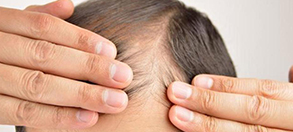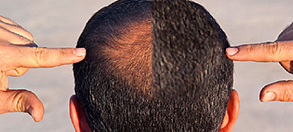

Forehead reduction, or hairline lowering, is a procedure that surgically reduces the height of the forehead. (1) More specifically, it shortens the distance between the hairline and eyebrows, creating a more proportionate appearance. In the past, surgeons would remove a strip of skin at the hairline and adjust it downward. While this procedure can provide substantial results, it has historically not been suitable for all patients. It is more invasive, creates a less natural hairline, and does not allow patients with tight scalp skin to undergo the procedure. Fortunately, advancements in hair restoration technology have created more options for hairline lowering and forehead reduction.
Dr. Goran Jezic and his team at Houston Hair Transplant Center (HHTC) specialize in advanced follicular unit extraction techniques, MEGA session FUEs, and unparalleled artistry that allows for natural, seamless hairlines for both male and female patients.
To explore your options, contact HHTC online or call (713) 864-2300 to schedule your complimentary consultation.
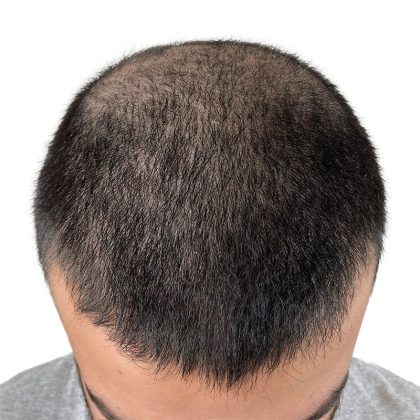
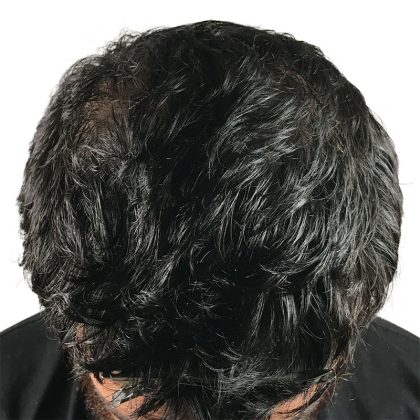
Before and After Photos


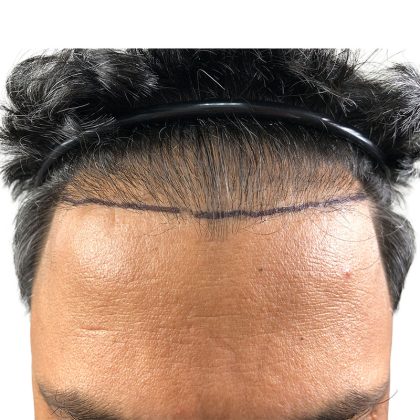
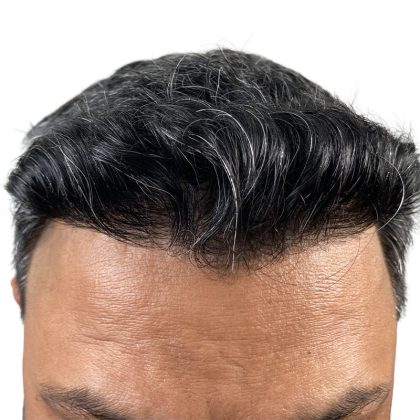
About Traditional Forehead Reduction
Traditional forehead reduction is performed by surgically removing a strip of skin at the hairline. This procedure effectively shortens the forehead and balances facial proportions with one efficient procedure. However, measurable advancement of the hairline is dependent on scalp laxity, so patients with tighter skin cannot undergo the procedure in most cases. Additionally, the more structured shape of the newly positioned hairline does not fit every patient’s stylistic goals.
This method, as a standalone treatment, has also been associated with a higher risk of more visible scarring, hair loss at the incision site, and excessive skin tension.
About Hair Transplants
By lowering the hairline through hair transplantation rather than surgical excision, patients can experience an easier recovery and more natural results. A hair transplant procedure relocates healthy donor hair follicles from the back and sides of the scalp to create fullness in areas that have been affected by hair thinning or hairline recession. (2)
At HHTC, our team of hair restoration specialists utilizes FUE (follicular unit extraction—also called follicular unit excision), which allows them to extract individual hair grafts with precision and implant them into the desired region at the optimal angle and direction. FUE offers minimal, non-linear scarring for more discreet results.
HTTC also offers MEGA session FUE, which can transplant up to 5,000 grafts in a single procedure, providing even more substantial, transformative results for patients with more advanced hair loss.
These distinct FUE capabilities help establish hair transplants as a valuable tool in forehead reduction surgery and a viable standalone alternative.
How Hair Transplants are Changing Forehead Reduction
The team of specialists at HHTC employs FUE to create natural-looking fullness and hairlines, promote hair longevity, and expand patient eligibility in ways that a forehead reduction procedure cannot accomplish on its own. The advantages of incorporating FUE into forehead reductions include:
Refining the Hairline After Surgical Reduction
Lowering the scalp may reduce forehead size as desired, but the new hairline is sometimes sharper or more structured in appearance than patients would prefer. Hair transplants allow specialists to refine, soften, or blend this area by artistically placing hair grafts in a way that suits your personal preferences. Your new hairline will seamlessly blend with the growth patterns of your implanted grafts for a natural shape, allowing you to get the best results out of your forehead reduction. (3)
Creating a Less Invasive Alternative for Select Candidates
Hair transplants can create a visibly lowered hairline through less extensive surgical techniques. With an adequate donor supply, the hair restoration specialists at HTTC can place grafts in a downward angle on the forehead, building density and creating a naturally fuller, lowered hairline. This can be especially advantageous for individuals whose skin elasticity (or lack thereof) does not support the forehead reduction or who simply wish to avoid a more invasive surgery. These techniques also avoid more pronounced linear scarring. (2) Although the degree of visible lowering varies, this option provides an appealing option for most patients.
Enhancing Temple and Lateral Hairline Shape
Since the focus of forehead reduction is the central hairline, the procedure does not always address recession of the temporal hairline or any other asymmetrical hairline issues. FUE allows us to redefine the temples, fill thinning areas, and blend the lateral hairline into the newly lowered frontal line. This work creates a more natural proportionate cohesion around the framing of the upper face.
Supporting Revision and Corrective Work
The FUE technique allows your specialist to employ a level of artistry and precision to produce personalized, natural-looking results that can elevate your previous forehead reduction results. Many patients turn to this procedure to further customize a hairline with more creative aesthetic control than other conventional procedures.
Expanding Candidacy for Hairline Lowering
Hairline-lowering/forehead reduction is not recommended for all patients. Some do not have the amount of scalp skin necessary to effectively and safely undergo the procedure. Men who experience or are likely to experience male pattern baldness are often advised against traditional hairline lowering, as the surgery alone will not provide a long-term solution to hair loss. For them and many others, FUE is the most suitable and appealing choice. Even patients with limited donor supply can consider body-to-scalp transplants, which increases eligibility potential.
Improving Hairline Feminization and Masculinization
Hair transplants can help modify the hairline to match gender specific aesthetic goals. Some patients prefer a traditionally feminine, rounded hairline, while others want a more angular and traditionally masculine shape. Forehead reduction alone cannot always be tailored to this level of preference. Modern hair transplant procedures like MEGA session FUE allow our clinicians to sculpt curves, adjust angles, and fine-tune density to create a hairline shape that aligns with the patient’s personal style and facial structure.
Strengthening Density Where Surgical Advancement Cannot Reach
While forehead reduction may address the visible size of the forehead, it cannot correct thinning hair. Hair transplants can help enhance the newly positioned scalp by adding supportive density and strengthening the overall look of the hairline. This added density creates a fuller, more stable appearance and prevents the hairline from looking sparse or delicate in the months and years following surgery.
Personal Consultation
At your complimentary consultation, one of our hair restoration specialists will evaluate your scalp, hair growth patterns, donor availability, forehead and hairline structure, and discuss your goals. After your assessment, they will address any questions or concerns you may have and then formulate a personalized treatment plan that aligns with your desired outcome. When you are ready to start your hair transformation journey with HHTC, fill out an online form or call our office at (713) 864-2300 to schedule your consultation.
Cost of Hair Transplant Forehead Reduction in Houston, Texas
The cost of forehead reduction with hair transplant treatment varies depending on factors like the number of grafts collected and relocated, the size of the treatment area, the chosen technique, and the complexity of your case. At your consultation, our team will be able to provide you with a cost estimate based on your personalized treatment plan.
FAQ
Can a hair transplant replace a surgical forehead reduction?
For some individuals, yes. When donor density is strong and the desired degree of lowering is modest, FUE can create the visual effect of a lower hairline without surgery.
Can a hair transplant hide the incision scar from a forehead reduction?
Yes, a hair transplant can help with this concern. Hair transplants can soften and disguise the surgical line by adding natural texture and increased density in the areas surrounding the scar.
How much can a hair transplant lower my hairline?
The answer to this question can vary depending on the patient. Some individuals can achieve significant downward extension, especially with MEGA session FUE, while others require a combination approach for desired results.
Are hair transplant results permanent?
Transplanted hair follicles generally maintain long-term growth because they retain the characteristics of the donor region. Because hair grafts are taken from areas more resistant to hair loss, like the back of the scalp, these hairs are less likely to fall out and cease growth.
What if I do not have enough donor hair on my scalp for an FUE procedure?
Your specialist may perform body-to-scalp grafting using donor areas such as the beard, chest, or arms to support your treatment plan. Schedule a consultation to determine your eligibility.
Can a hair transplant serve as a forehead reduction for all hair types?
If a patient qualifies as a candidate, then yes! Dr. Jezic and the team’s sophisticated FUE techniques are applicable to all hair types, regardless of length, color, diameter, ethnic differences, and more.
References
- Ekizceli C, Hocaoğlu E. Forehead Reduction: A Retrospective Study of 820 Consecutive Cases. Aesthetic plastic surgery. Published online November 2025:10.1007/s00266-02505421-7. doi:https://doi.org/10.1007/s00266-025-05421-7
- Zito PM, Raggio BS. Hair Transplantation. PubMed. Published 2021. https://www.ncbi.nlm.nih.gov/books/NBK547740/
- Ahn YS, Park YY, Chang JW. Multiplane Forehead Shortening: Sparing the Frontalis Muscle and Supraorbital Nerve. Plastic and Reconstructive Surgery. 2019;143(2):405. doi:https://doi.org/10.1097/PRS.0000000000005271